
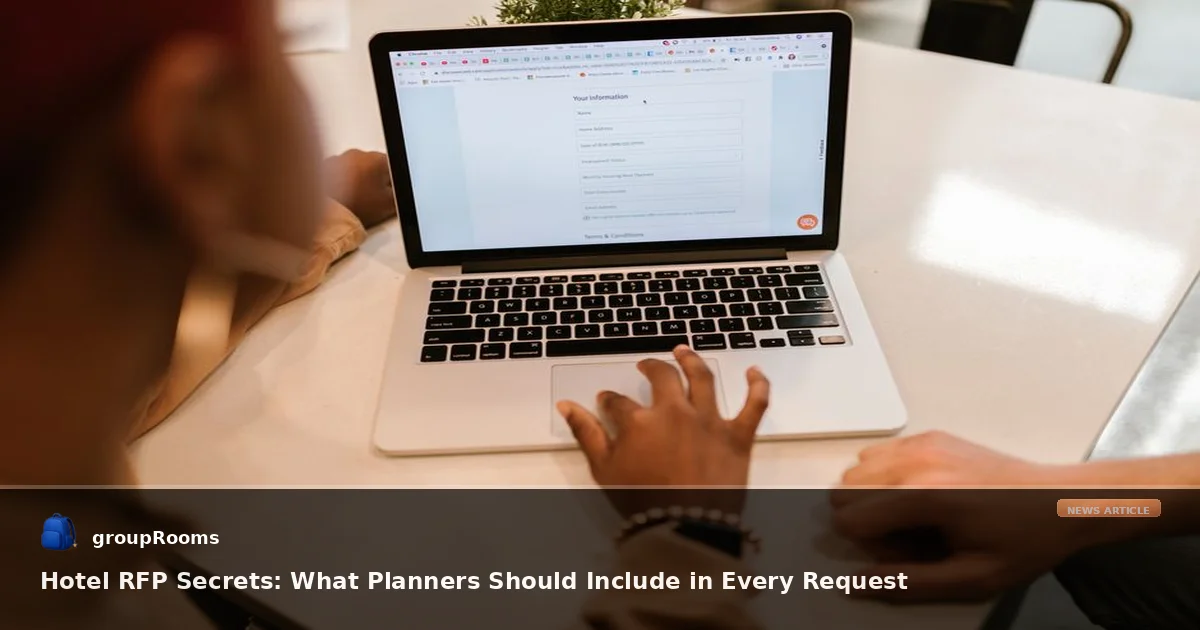
Ask a dozen meeting and event planners what separates a smooth group booking from a stressful one, and most will point to the same document: the hotel RFP. A request for proposal is the backbone of any group hotel booking, because it tells every property exactly what you need, on which dates, and for how many people — and it gives hotels the information they need to compete for your business.
A sharp hotel RFP does far more than list dates. It sets expectations, protects your budget, and pulls concessions out of hotels that a vague inquiry never will. Whether you are planning a wedding, a corporate event, or a sports team trip, here is what planners should include in every request.
What a Hotel RFP Is — and Why It Matters
A hotel RFP is a formal request that lays out your group’s room needs and asks hotels to respond with rates and terms. For group bookings — five or more rooms — a single, well-structured hotel RFP lets you compare competing offers side by side instead of calling property after property.
Hotels read these requests constantly. The ones that earn serious responses are specific about rooms, dates, and budget. The ones that get ignored are vague. If a hotel cannot tell how many rooms you need or when you are coming, it cannot give you a real group hotel rate — and it will not try very hard to guess.
The Essentials Every Hotel RFP Should Include
1. Exact dates — with a little flexibility
List your check-in and check-out dates, and note whether they are firm or flexible. If you can shift by a day or two, say so. Flexible dates frequently unlock better group hotel rates, because hotels can fit your block around other demand.
2. The size of your room block
State the number of rooms you need per night, your peak night, and how the count changes across the stay. Hotels price room blocks against expected demand, so an accurate count — even a range — helps them quote genuine group hotel discounts instead of a placeholder number.
3. Your room type mix
Specify how many kings, doubles, suites, and accessible rooms you need. The mix changes the quote, and locking it down up front prevents a scramble at check-in.
4. A budget or target rate
Share a realistic rate range. Planners who include a target rate get back quotes they can actually act on, and it keeps the conversation focused on a number that works for everyone.
5. The concessions you want
Ask for the extras up front: complimentary rooms for organizers or VIPs, discounted or waived parking, resort-fee waivers, and late checkout. Concessions are far easier to win when they are part of the original request rather than an afterthought.
6. Attrition and cutoff terms
Clarify how unused rooms are handled and when your block releases back to the hotel. Understanding attrition and cutoff dates in writing protects you from paying for rooms you could not fill.
7. Meeting or event space
If your group needs a ballroom, breakout rooms, or a hospitality suite, describe it now. Sleeping rooms and event space are often negotiated together, and bundling them can strengthen your whole package.
8. Billing, deposits, and payment
Spell out who pays for what: a master account for the group, individual pay for guests, deposit timing, and when the balance is due. Clear payment terms prevent billing disputes later.
9. Your decision timeline
Tell hotels when you will decide. A clear deadline produces faster, more serious responses and keeps your short list moving.
10. Special requests
Early check-ins, late departures, bus or van parking, catering and dietary needs — list them all. Details like these are often the difference between an acceptable stay and a memorable one.
Concessions Worth Asking For
Concessions are the quiet value in any hotel RFP, and many planners leave them on the table. The most common wins include a complimentary room for every block of rooms you book, discounted parking, waived resort or amenity fees, a hospitality suite, and upgrades for your VIP guests. You will not get everything you ask for — but you will rarely get anything you do not ask for.
Common Hotel RFP Mistakes to Avoid
- Being vague. “Some rooms in October” will not earn a serious response. Specifics do.
- Waiting too long. The best room blocks and the best group hotel rates go to planners who ask early.
- Skipping the budget. Without a target rate, hotels guess — and their guesses rarely favor you.
- Ignoring attrition. Not understanding your cutoff and attrition terms can quietly cost you money.
- Leaving concessions for later. Once you have committed, your leverage shrinks. Ask while you have it.
Send One Hotel RFP and Let Hotels Compete
Writing a thorough hotel RFP takes effort, but sending it does not have to. On groupRooms, you complete a single request with your group’s dates and room count, and it goes out to competing hotels that respond with group rates — with no markups and no commissions, just hotels competing for your block. It is the fastest way to put a professional group hotel booking in motion.
Before you draft your first request, brush up on how to negotiate group hotel rates and why hotels offer group rates in the first place. Then, when your details are ready, submit your hotel RFP and watch the offers come in.